
-
Customer Mails & Inquiry
kp@onellaexport.com
-
Opening Times
08:00 AM - 08:00 PM
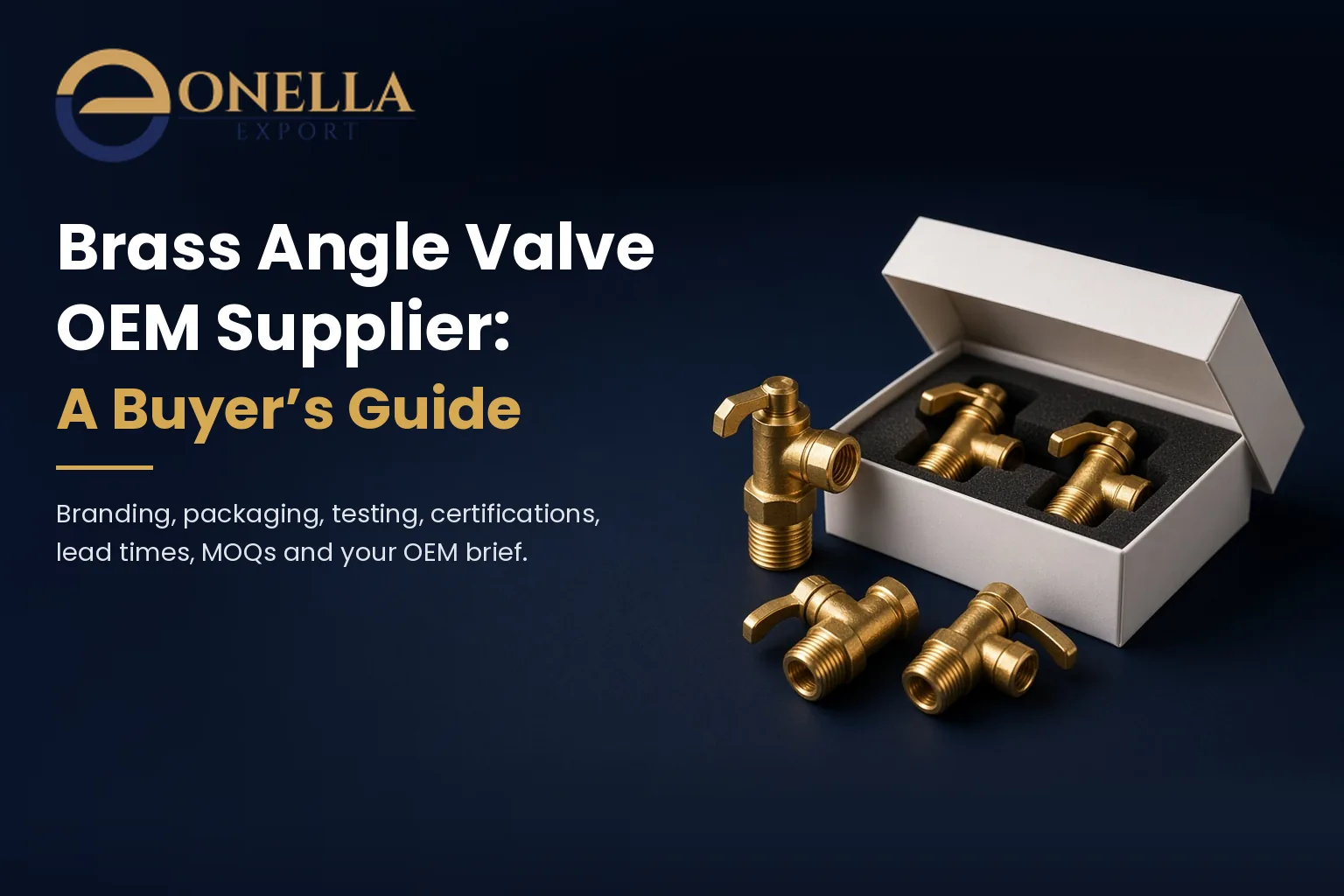
Private-label valves often seem straightforward on paper. You select a standard product, apply your brand logo, and await delivery of the packaged inventory. However, practical issues frequently arise with the first shipment like unclear logo markings, packaging dimensions that fail to fit retail displays, or a complete lack of clarity regarding factory pressure and quality testing.
Partnering with a reliable brass angle valve OEM supplier prevents these operational setbacks, provided you establish explicit production standards from the beginning. Defining your exact product specifications, branding criteria, and packaging expectations up front eliminates costly quality gaps before manufacturing begins.
This guide breaks down the essential technical and commercial conversations to have with your supplier before placing a production order.
Whose Name Goes on the Valve?
Start with branding, because it affects everything downstream. Do you want your logo marked on the body, printed on the box, or both? Will the marking be engraved, stamped or applied another way? Ask the supplier what marking methods they can handle and request a sample on a real valve, not a mock-up on a screen.
Also check what they need from you. Artwork format, colour references and placement drawings all save time when sent together. Agree who approves the proof and how long you’ll need to review it. A missed detail in a logo file gets repeated on every valve in the batch.
Packaging Is Part of the Product
Your customer meets the carton before the valve. So spend real time on it. Ask about individual packing, outer cartons, labelling and what information can appear on each. If you sell through retail, think about how the box looks on a shelf and whether it protects threads and surfaces on the way there.
For bulk or trade supply the questions shift. How many pieces to a carton, how are cartons marked, and can labels carry your product codes? A neat valve inside a crushed box still produces an unhappy buyer.
Testing: What Gets Checked and Who Sees the Result
Valves hold water and pressure, so ask plainly what testing is done before dispatch. Is every piece checked, or a sample from each batch? What happens to a unit that fails? Are results recorded, and can you see them?
You don’t need to demand a laboratory. You need straight answers. A supplier who explains their process in ordinary words, including its limits, is usually more dependable than one who simply says everything is tested. If your own market expects particular tests, tell the supplier at the start rather than at dispatch.
Certifications: Ask for Paper
Buyers sometimes assume a brass valve maker holds whatever certification their market wants. Don’t assume. Ask which certifications the supplier actually holds, ask for copies, and check that they’re current and relate to the product category you’re buying. If a particular one matters to your customers or regulator, say so early and ask whether it can be supported.
A clear “we have this, we don’t have that” is a good sign. It leaves you free to plan around the gap.
Lead Times and Repeat Orders
Quoted lead times can be optimistic, so ask what the number covers. Does it include marking, packing and any testing, or only the manufacturing? What could stretch it, and how will you be told if a date moves?
For repeat business, ask how your artwork, packaging specification and approved sample are stored. The second order should match the first without anyone re-explaining it. Where your sales depend on a fixed date, build some slack in. A supplier who says “that depends on approvals” is easier to plan around than one who promises a date and then slides.
The Strategic Advantage of Manufacturing Hubs
Jamnagar has long been known as a centre for brass work in India, so it’s no surprise that buyers searching for a brass ball valve manufacturer Jamnagar suppliers can often end up comparing several names.
Being in the right town helps with convenience, since you can visit and see production. It doesn’t replace the questions above, which apply to every supplier everywhere.
Understanding Minimum Order Quantities (MOQs) and Scaling
Why MOQs Matter for Custom Brass Valves
OEM suppliers often enforce Minimum Order Quantities because custom tooling, specific body stampings, and branded packaging require dedicated setup time. Clarify these volume thresholds early to align with your inventory forecasts.
Scaling Up Without Quality Drift
As your order volumes grow, negotiate scheduled releases rather than one massive shipment. This protects your cash flow, keeps warehouse space manageable, and ensures the manufacturer maintains consistent quality control across every batch.
Preparing Your OEM Brief
Gather these before you write to anyone:
- the valve type and size range you want, with the brass angle valve specification you’re working from
- branding requirements and artwork files
- packing and labelling needs
- any tests or certificates your market expects
- expected quantity, repeat pattern and target date
An enquiry that covers this ground gets a faster and more accurate reply, and it makes quotes from different suppliers comparable.
Ready to discuss branding, packing and quantities? Write to the Onella Export team.
FAQs
What does OEM mean when buying brass valves?
It means the valve is made by the supplier and sold under your brand. You supply the branding and packaging requirements, and the supplier produces them.
How do I judge a supplier’s lead time?
Ask what the stated time includes, what could extend it and how delays are communicated.
How should I check certifications?
Ask for copies, confirm they are current and make sure they relate to the product you’re buying. Don’t rely on a mention in a brochure.
Related articles