
-
Customer Mails & Inquiry
kp@onellaexport.com
-
Opening Times
08:00 AM - 08:00 PM
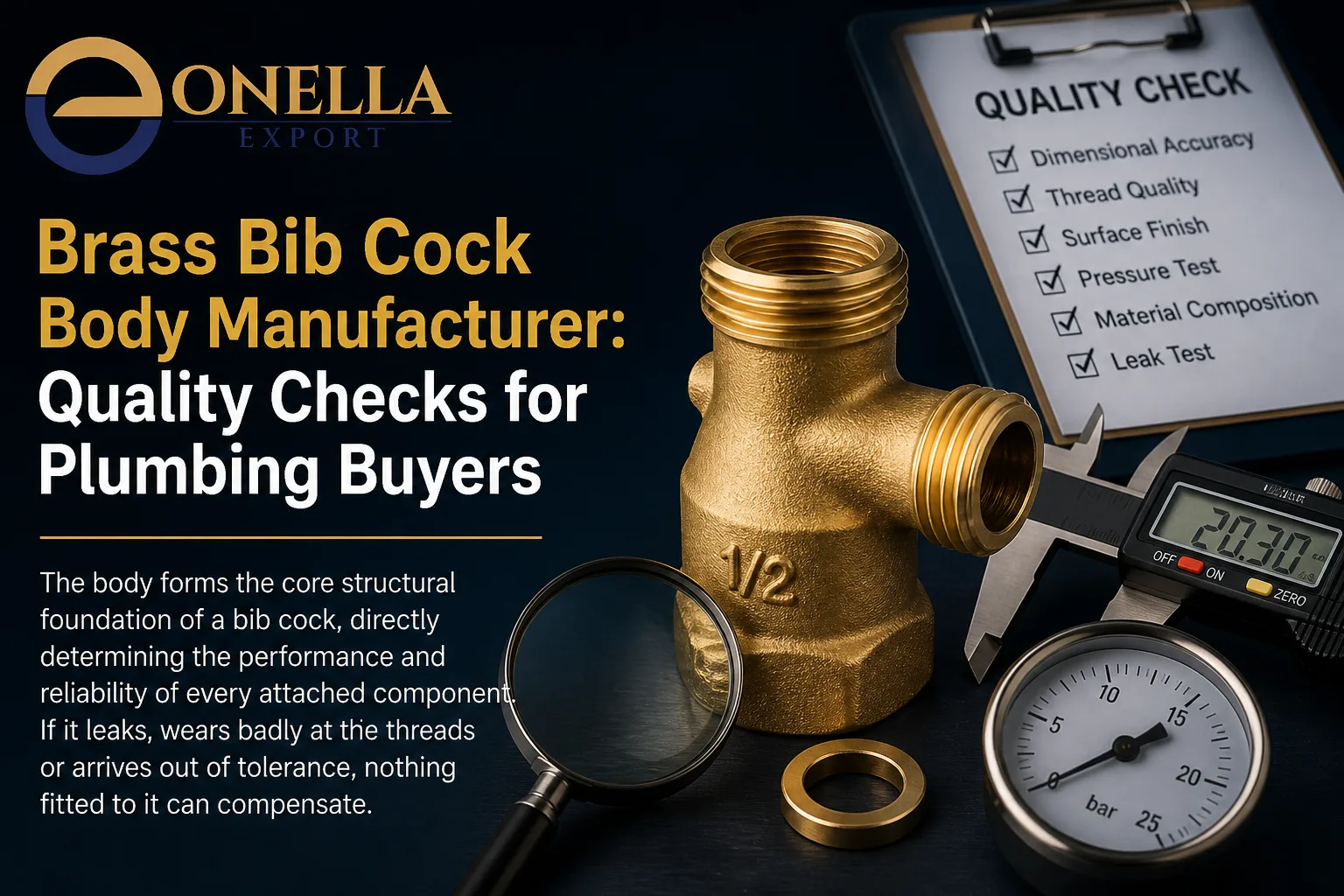
The body forms the core structural foundation of a bib cock, directly determining the performance and reliability of every attached component. If it leaks, wears badly at the threads or arrives out of tolerance, nothing fitted to it can compensate. That is why plumbing buyers who compare a brass bib cock body manufacturer on price alone tend to find the real differences later, in returns and in complaints from installers.
This guide sets out the checks worth running before you commit to a supplier. It is built on guidance Onella Export has already published for brass buyers on its own site, and it is phrased as questions so you can apply it to any manufacturer you are considering.
Things to Ask the Brass Bib Cock Body Manufacturer
Ask How the Body Is Made
Start with the process. Ask whether the body is forged or cast, and ask why the supplier chose that route for this part. Do not treat either answer as right or wrong in isolation. The useful signal is whether the supplier can explain the choice in terms of your requirements: pressure, finish, volume and cost.
Onella states on its homepage that it has its own forging and machine turning facilities in-house, supplied by a foundry that produces brass solid and hollow bars. Whichever supplier you assess, ask which of these steps happen under one roof and which are outsourced. In-house steps are easier to inspect and easier to hold to account when something goes wrong.
Questions to put in writing:
- Is the body forged, cast or machined from a bar, and why?
- Which steps are done in-house, and which by subcontractors?
- If a subcontractor is involved, who is responsible for dimensional errors?
- Can the supplier show photographs or video of the actual production floor?
Material and Alloy Grade
Ask which brass grade the body is made from, and treat a vague answer as a warning. Onella’s ball valve guide advises asking where the raw brass comes from and whether it is traceable stock or scrap of uncertain origin, and notes that a confident supplier will name the copper-zinc ratio without hesitation.
Onella Export supplies brass sanitary components in various international brass grades according to customer specifications. This level of detail serves as a good benchmark for what to expect from a reliable manufacturer. When sourcing a bib cock body, ask your supplier to state the exact material grade in writing and provide a material test certificate for each production batch.
Finish Options
The finish affects appearance and also how the part ages in service. Onella’s sanitary components page lists brass natural, nickel, chrome, silver, gold and electro-tinned finishes as per customer requirements, which shows how wide the range can be for sanitary parts.
Before confirming an order, establish clear requirements for surface finishes on the bib cock body. Verify which finishes the supplier can apply, whether finishing is completed in-house or through a partner, and request a physical finished sample rather than relying on photographs. You should also confirm how the manufacturer maintains color and finish consistency across different production lots. Once approved, retain the physical sample in writing to serve as your visual benchmark for future reorders.
Pressure Testing
Onella’s guidance on brass valves is direct: general claims that a product is leak-proof are not enough, and a buyer should ask for batch-specific pressure test results tied to the exact product and pressure class. A supplier who sends the report without hesitation has nothing to hide, in Onella’s words, while one who stalls deserves a second look.
Apply the same standard to bib cock bodies. Ask:
- What pressure is each body tested at, and how?
- Is every body tested or only a sample from each batch?
- Are results recorded and available for your batch?
- What happens to a body that fails the test?
If your market publishes a test standard for taps, name it in your enquiry and ask the supplier to confirm in writing which one it works to.
Threads and Tolerances
Onella’s published advice stresses that BSP, NPT and metric threads are not interchangeable, and recommends confirming in writing which standard a manufacturer machines to. Its article on BSP vs NPT threads explains how those standards are specified and the common mistakes in ordering.
Mark the most critical dimensions directly on your technical drawing. For a bib cock body, this typically includes the inlet thread, the internal valve seat, and the mating surfaces where secondary components attach. Confirm with the supplier how those dimensions are measured, how frequently checks occur during production, and what corrective actions are taken if a batch begins to drift. Providing complete details upfront, including exact dimensions, tolerances, material requirements, surface finishes, and thread specifications, ensures accurate quotes and reliable manufacturing.
Custom Orders and Samples
Many buyers need a body that matches an existing design. Onella’s sanitary components page says it also manufactures brass sanitary fittings according to customer requirements or specifications. Whatever supplier you approach, send a drawing and, if you have one, a physical sample.
Then ask:
- Can you work from a drawing, a sample or both?
- Is there a minimum order for custom bodies?
- How long does sample making take, and what does it cost?
Onella’s importing guide states that MOQ depends on component complexity, tooling and whether a part is standard or custom, and advises asking for an MOQ specific to your drawing. It also recommends a modest trial order before full production.
Wholesale and Export Considerations
If you buy brass plumbing parts wholesale, plan for volume from the start. Agree packing, carton labelling and the documents that will accompany each shipment.
Onella’s importing guide lists material test certificates, a commercial invoice and packing list, and a certificate of origin as documents to expect from a reliable exporter.
It also gives indicative timings of two to three business days for a quotation and technical review, and one to two weeks for sample making and dispatch. Treat those as Onella’s published guidance and confirm timelines with any supplier for your own part.
The importing brass components guide explains MOQ, lead time and documents in more detail.
Supplier Checks Before You Commit
A few checks apply to any manufacturer:
- Ask for certificates, including any ISO certificate with its valid dates, not only claims on a website.
- Send one real technical question before ordering and time the reply.
- Ask how a dimensional discrepancy found after arrival would be handled.
- Ask what post-sale support and replacement procedures apply to defective units.
Onella’s homepage states ISO 9001:2015 certification and a start in Jamnagar in 1991. Its quality page describes testing and inspection in each phase of production, from procurement through manufacturing, packaging and delivery. As with any supplier, ask to see the certificate and the inspection records behind those statements.
A Simple Comparison Table
When replies come in from two or three manufacturers, put the answers side by side under the same headings: process, material grade, finish, pressure testing, tolerances, sample terms, MOQ, documents and communication. Gaps in the table are as informative as the entries. A supplier that answers every row with specifics is usually the better partner.
You can connect with Onella Export’s team to discuss your specific requirements. Contact us and send your drawing or samples.
Frequently Asked Questions
Should a bib cock body be forged or cast?
There is no single answer. Ask each manufacturer which process it uses for the part and why, and judge the explanation against your requirements for pressure, finish and volume.
How do I verify pressure testing?
Ask for batch-specific test results tied to your product and pressure class, and ask whether every body is tested or only a sample.
Can a manufacturer make a body for my drawing?
Ask whether it works from drawings, samples or both. Onella Export manufactures brass sanitary fittings to customer requirements or specifications.
Related articles